
Bring Back Privateers
This is NOT investment advice.


The US and China are already, by most reasonable metrics, already at war. That this war has not been officially recognized is immaterial—we in the US have not done that since the Second World War anyway. Neither does it particularly matter that we are still each other’s largest trading partners: the complete cessation of trade in time of war was an innovation of the modern era and likely to be, like so many other innovations, discarded as obsolete and clumsy in a more chaotic world. What is significant is that our geopolitical interests have clashed to the point where local conflicts are increasingly being fed by both sides in an attempt to secure territory, resources or prestige for increasingly divergent hegemonic orders. This trend is complicated by the wholesale supply-chain shift known as the “energy transition,” which places increasing strategic importance on (new) remote and war-torn parts of the globe where neither bloc has much tangible influence and experience. But solutions exist for those problems—far more menacing for the West is the continued commitment of its leaders to hot war/cold war/peace thinking that worked well for characterizing pure interstate conflict but does not apply neatly to the nebulous slates of actors operating today. “The enemy’s gate is down:” without a shift in our perspective to match the situation, we are all but doomed to defeat at the hands of a more perceptive enemy. A good first start would be bringing back privateers. Hear me out:
The greatest innovation of the industrial era, at least from a political standpoint, was the bureaucratic state. A combination of pressures brought on by a rapidly-changing world—explosive population growth, unprecedented economic prosperity, rapid communication and mass education that fostered nationalist sentiment all stand out—enabled and eventually impelled the centralization of power under the state. This process can reasonably be said to have begun with the French levee en masse during the Revolutionary Wars and reached its end with the First World War, which crushed those states that were unwilling or unable to centralize enough to bear the weight of a total war. If the Long 19th Century was when modern states formed, then the Short 20th was their heyday. Totalitarian regimes dictated every aspect of life across vast swathes of the world, while even in the so-called free world, states placed restrictions and levied tolls on ordinary life that would have been intolerable just decades before. Theories of international relations focused almost exclusively on the dynamics between these vastly powerful states—most famously in the “billiard ball model” that imagined states interacting with one another in (relatively) logical ways to be essentially the sum of global politics.
The post-1991 world has introduced a number of curveballs into the equation. The peak of US power in the 1990s saw it extend its influence worldwide indirectly through the soft power of culture, international institutions such as the UN, and commercial bodies like the WTO. Meanwhile, 9/11 demonstrated that nonstate actors can have tremendous effects on global politics, even when they lack the support of major states. Even the staid field of international politics began to devote considerable effort to reworking theories to account for the increasing influence of corporations, terrorist groups and other powerful actors.
Today, we are still very much in a world of powerful states. Our lives are regulated on every level by our governments, which have continued to steadily accrue power even as totalitarianism as an explicit system has fallen out of favor. Leveraging new technology, states have gained the power to surveil their citizens, enforce taxation, and even physically corral their citizens in ways that even the most explicitly comprehensive states of the last century could only dream of. However, those same technological leaps have also expanded the power of other actors, while simultaneously rendering states vulnerable in novel—and potentially cataclysmic—ways.
An example of a private concern that has accrued enough power to be of geopolitical significance is Meta, which offers services used by more than half of the planet’s population and collects reams of data on all of them. The company’s wealth, influence and global pervasiveness have already led it to be described in such mainstream publications as The Atlantic as an “hostile foreign power” and caused calls from very respectable quarters to give it seats at bodies typically reserved for states, such as the UN, in an attempt to get it to play by the rules. It has also, alongside other tech giants, been the target of intense antitrust campaigns by state regulators across the world. While these initiatives are typically framed as motivated by consumer protection concerns, they could just as easily—if perhaps less charitably—be interpreted as governments struggling to protect their turf from a new competitor.
Meanwhile, the sheer complexity of modern states, combined with our high-tech environments, has exponentially increased the number of potential failure points. A high-profile recent example was an attack on electrical substations in Moore County, North Carolina, which was allegedly perpetrated by locals with guns who were disgruntled by a drag show in the area. While states have never been more capable, the same can now be said about angry vigilantes: random guys with rifles have always been a problem for states, but now the amount of havoc they can create is effectively unbounded. Thousands of homes were cut off from utilities for several days because of a couple of complete amateurs—and since it is obviously unfeasible to protect every local utility around the country 24/7, the authorities are reduced to hoping that enough people don’t get the same idea all at once. Newer technology like drones and AI present even more serious challenges, and it is far from clear that states will have the will or the means to effectively tackle them.
The result of all this is a curiously two-tracked development path whereby states and non-state groups are simultaneously getting more powerful, with non-state groups arguably relatively closing the gap. The losers here are, of course, ordinary people, who are living in a world that is somehow both more oppressive and more chaotic.
All this is intensely relevant in the context of what is fashionably called “great power competition”—but might more honestly be termed low-grade warfare—between the American and Chinese coalitions. Unlike the Second World War, this is not a total war, where all the resources and population of every combatant state are mobilized. And unlike the Cold War, this is not an ideological confrontation, where each combatant state is bent on the destruction of the other’s way of life. Neither China nor America care very much about how the other is governed, except for where the other government interferes with the national interest. Instead, it is a much more traditional contest for prestige and resources between a coalition of governments, corporations, powerful individuals, and international institutions aligned around the American state, and a similar coalition aligned around the Chinese state. While these two states are by far the most powerful members of their respective coalitions, with the ability to disburse kingmaking resources and set the overall strategy and tempo for their team, they are by no means the only voice. This conflict will, to an extent not seen since before the First World War, be determined by coordination problems between these diffuse coalitions and a large number of free agents—states and non-states alike.
Nowhere will this trend be more pronounced than in the resource-rich no-mans-lands of the global South, where strong states never developed to begin with and there is consequently a profusion of non-state groups, from multinational firms to militia groups to aid organizations, that wield some degree of authority and can be dealt with directly. The Democratic Republic of the Congo, for example, is largely a legal fiction outside of Kinshasa. An accurate map of that vast, resource-rich territory would be mostly blank—or a dizzying patchwork of local governments, rebel groups, resource concessions and rogue military units (oh yeah, and Rwanda). American-aligned and Chinese-aligned actors are moving into the region, mostly because of its abundance of materials that are vital to renewable energy production and storage. Western groups have a roughly 70-year jump on Chinese actors, but China has displayed a pragmatism and aggressiveness that internal Western political economies would never permit. In addition to aid groups, NGOs and established multinational mining concerns, such colorful characters as Erik Prince (of Blackwater and, more recently, Donald Trump fame) have been seen around Kinshasa. It is not always immediately clear what many of these people are up to, but “no good” and “state-sanctioned” are probably both decent guesses.
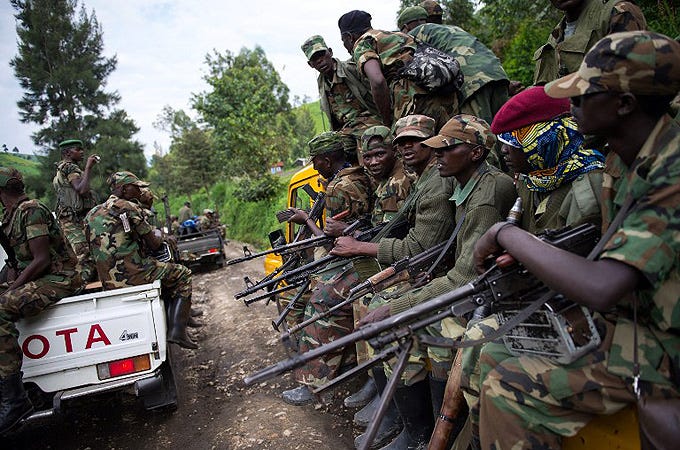
There are good reasons why the American and Chinese governments, as the captains of their respective teams, would want to outsource much of their conflict to their clients. Looming over the entire confrontation is the fact of Sino-American interdependence: an open rupture would, at least in the short-to-medium term, be cataclysmic for both sides. It makes good sense to offload the direct clashes to various henchmen in order to gain some plausible deniability. Having clients do the fighting also insulates the American and Chinese metropoles from the consequences of conflict: casualties, environmental devastation, disease outbreaks etc. This is important to both sides from a public-opinion standpoint but also because of mounting demographic pressures that make young men a more valuable resource than at any point since the Industrial Revolution. Fortunately, pre-industrial society provides many examples of mechanisms by which warring states outsourced their dirty work to clients: they were called letters of marque, and the clients were called privateers.
During the Golden Age of Piracy, the problems that privateers solved for their states was different from the problems that face states today. 17th and 18th-century colonial states were much weaker and less able to exercise authority over long distances, and the very different state legitimation methods in use then permitted dizzying shifts in alliances (one extreme example, the War of the League of Cambrai, started as a war between France and Venice and ended with a Franco-Venetian victory over Spain, England and the Pope). In a time when crossing the Atlantic took several weeks, it was impracticable to send fleets back and forth whenever hostilities erupted. Privateers, however, were available to colonial governors on demand and could be switched on and off as fast as couriers could deliver a letter. In times of peace, states did not need to maintain the privateer and his crew. If a privateer was killed, he did not figure in casualty statistics. Because he was motivated by money and not inflamed national passions, he did not care if he woke up one day to find that his enemy was now his ally. And he could be paid out of the enemy’s pocket, by being allowed to keep what he stole. All of these made privateers extremely attractive.
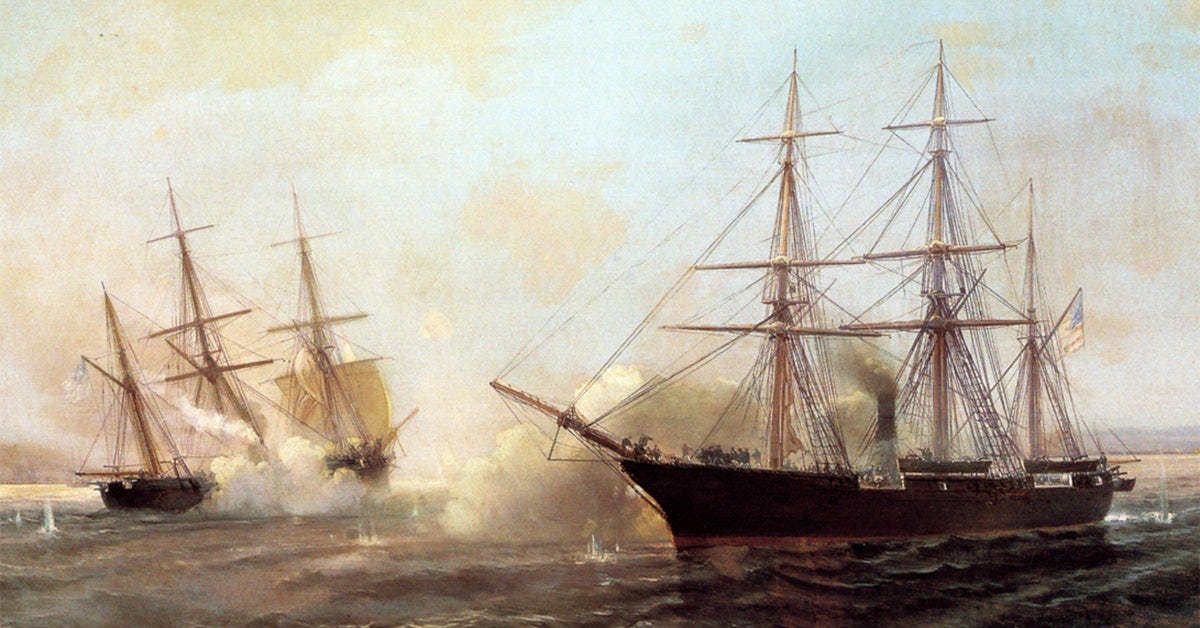
This is not to say that privateers did not have their problems. Because of the slow pace of mail, privateers in far-flung corners of the globe could continue attacking “enemy” shipping long after hostilities had ended back home. More perniciously, some were known to simply disregard orders to stop. They didn’t disappear when the left a state’s service and were prone to causing problems (read: regular piracy) when unemployed. Some states dealt with this by paying a retainer to the privateer to attack anyone but them, which negated many of the advantages offered by privateering in the first place. Other states dealt with regular pirates by issuing them pardons and letters of marque, which further blurred the distinction between mercenary and criminal.
These problems introduced inefficiencies into the privateer system but were not the reason for its eventual obsolescence. Improved communication and stronger states led to standing navies that could be deployed quickly and recalled at a moment’s notice, destroying the main advantages of privateers. The price and size of warships increased to the point where it was effectively impossible for anyone but states (and, bizarrely, Pepsi) to own them. And the rise of the nation-state system meant that mercenaries, once viewed as legitimate components of any army, were now seen as traitors. Privateering went into irreversible decline around the turn of the 19th century and, after a last gasp during the American Civil War, faded quickly from history.
However, as we have seen, many of the conditions that once made privateering attractive are becoming so again. As conflict shifts back into the age-old mode of decentralized skirmishes between loosely aligned groupings of players, privateering may be due for a renaissance.
My proposal is this: the American state ought to issue letters of marque to groupings of Western adventurers to go counter Chinese interests across the global south but especially in Africa. These letters of marque may take the form of formal decrees, but most likely would be informal guarantees of discretion provided by the State Department or the intelligence community. The letters would identify a Chinese concession or piece of infrastructure (mines, oilfields, railroads etc.), and promise American recognition of the claims of privateers to that asset—if they can take it. The letters might specify other incentives such as cash or arms that would make the job easier. In return, the privateer would undertake not to allow the Chinese team to use that asset or purchase its product, and instead offer it exclusively to American allies and clients at competitive rates. The “rightful owners” in these cases—meaning probably the state on whose territory the asset is located—could be cut into the deal as well, perhaps by assuring the payment of taxes or the use of (or employment at) the asset by the local population. This would almost certainly be a better deal than that offered by the Chinese, who are notorious for seizing assets and importing their own workforce.
The upshot of this program would be a marked reduction of Chinese influence on the continent, a corresponding rise of American influence, the establishment of islands of stability wherever these concessions are found (by tying payment directly the concession’s productivity, we incentivize privateers to establish law and order), and the foundation of a dispersed warrior class that is fundamentally friendly to American interests. There is some precedent for this: in the 1990s, the government of Sierra Leone offered the Executive Outcomes PMC diamond concessions in rebel-held areas of the country, provided that they crush the rebellion. The firm did so quickly and efficiently, saved the government, made a tidy profit and were even beloved by the people of Sierra Leone for putting an end to the chaos and bloodshed. Such an everybody-wins scenario is perfectly plausible when this program is implemented at scale across the continent.
Postmodern problems require postmodern solutions. This isn’t the Second World War, or even the Cold War. It isn’t the Seven Years’ War either, but we can productively take some pages from the books of conflicts long gone in order to solve today’s problems. The outcome of this new struggle is far from assured. We would be deeply remiss not to (re)consider some time-tested methods for getting the upper hand.
Create Islands of stability by promoting instability? What stops modern privateers from stocking unrest in rival privateers regions, and then going, "Look USA/China, they're doing such a bad job of keeping peace, give us the contract instead". Regardless of which side they're on, greed begets greed. I don't disagree that this could happen, but lets not try and present it as anything other than opportunism and neo-colonialism. Also, the claims of asset seizures and debt-trapping from the Chinese seem to be exaggerated by the West, and its not surprising that they originated from India. The type of thinking presented in this article is a massive reason as to why many countries in the Global South are working with China, if anything I think this proposal would hurt America's influence more than it would grow it. Interesting read tho